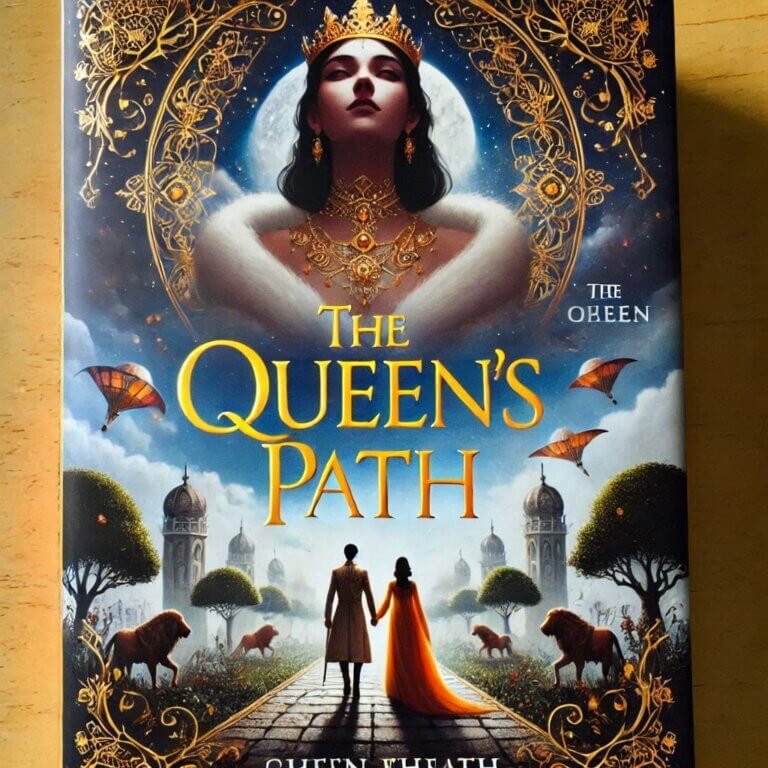

For days and nights, Junhao sat quietly in his room, time frozen around him. His heart torn into pieces by the past, everything around him seemed absurd, raw, and awkward. He locked himself in the room, refusing the concerned looks of his family and servants. Even a caring glance made him feel fragmented, his heart compressed to the point of near collapse, life sighing, his body controlled by demons – sometimes wanting to cry, sometimes wanting to laugh – everything lost meaning. His only feeling was that life was worse than death.
The summer sun blazed like fire, scorching the earth. A ray of sunlight penetrated through the gauze curtain. Junhao slowly rose from the ground. Anke was right; life goes on without anyone. He staggered towards the bathroom, the mirror reflecting his stubbled face, eyes bloodshot, lips colorless. Looking at himself, the corners of his mouth slowly curved into a sarcastic arc. Since she had the heart to leave him alone, why shouldn’t he marry Leng Xiang as she wished?
When Junhao tidied himself and stepped out, Leng Xiang, worried for days, was surprised. He was still the Junhao she knew, smiling faintly. It was as if the person who had been locked in the room for days, not eating or drinking, was not him at all. She couldn’t even see a trace of melancholy in his eyes.
Leng Xiang approached him, lips moving, looking at him with full concern: “Young Master Jun, are you okay?”
He walked down the circular stairs, reached her, and patted her cheek: “What could be wrong with me?”
“Good that you’re fine.” But she didn’t relax, his calmness felt oppressive.
“Xiang’er, let’s hold Anke’s funeral in two days, nothing too grand.” After walking a few steps towards the dining hall, he turned back to Leng Xiang: “Our wedding might be delayed. After all, she was once my woman, and I don’t want to handle both events simultaneously.”
Leng Xiang was stunned. What did he just say?
She blurted out: “What did you say?”
Junhao didn’t turn back: “Isn’t this what you’ve always wanted? I’m just fulfilling your wishes.”
Marrying him was indeed what she had always wanted, but now what was she? A substitute? Or a fulfillment of a dying wish? How were they treating her?